
Design process / Architecture
From a building to a deal toy.
How a recognizable asset becomes a well-proportioned commemorative, with the practical decisions made along the way.
The short answer
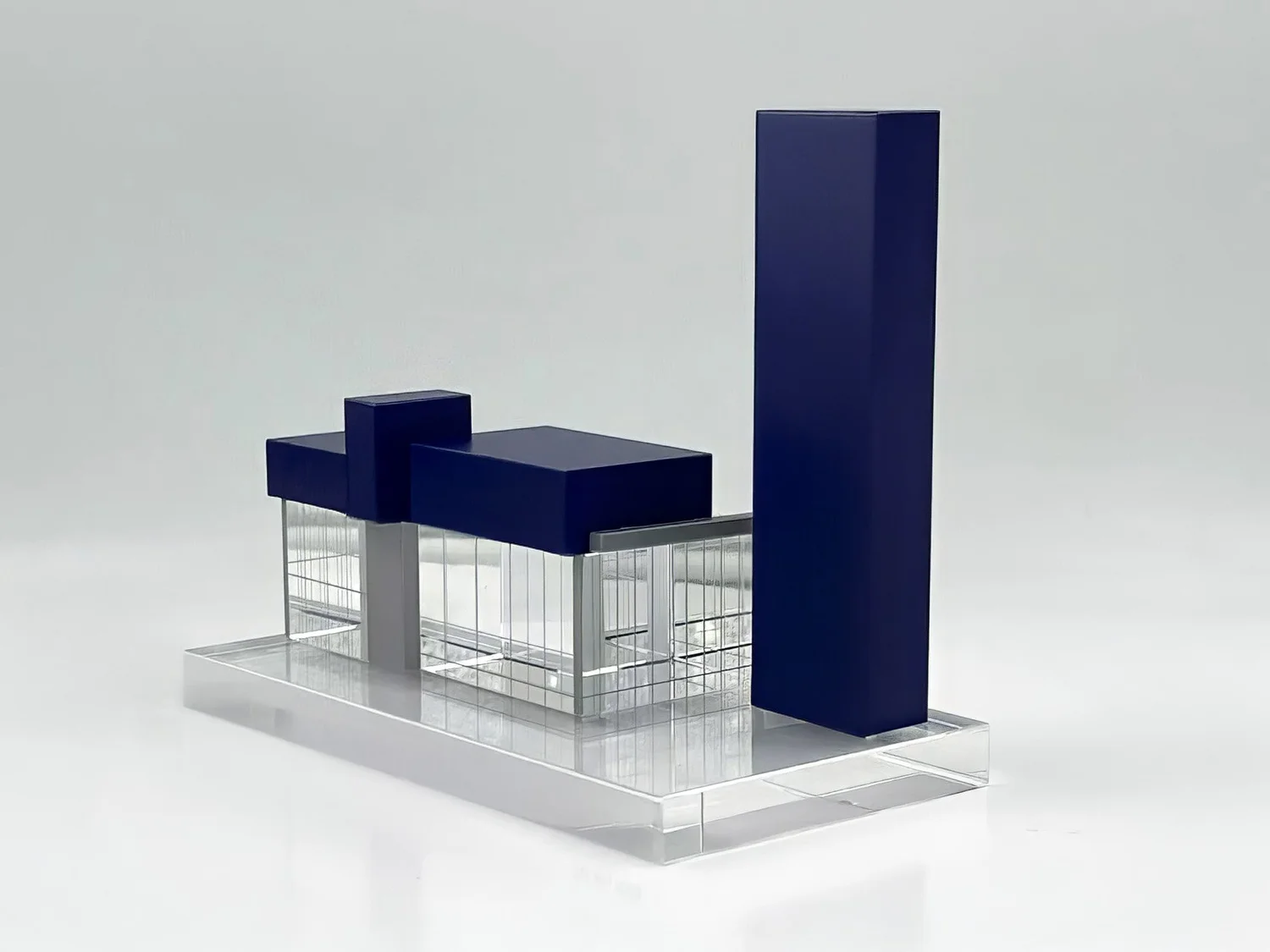
An architectural deal toy begins with the property and the purpose of the commission. The designer selects recognizable features, develops a manufacturable construction, then uses a physical prototype to verify the piece before the production run.
Understand what identifies the property.
Useful references include photographs, elevations, branding and the transaction information. The most recognizable feature might be the silhouette, facade pattern, roofline or a particular view.
The recipient should recognize the connection without needing every architectural detail. This is a commemorative interpretation, not necessarily an exact scale model or a construction document.
Explore more than one representation.
A building can be expressed through a photograph, a cut profile, layers or a dimensional model. Each approach changes the emphasis. The choice should reflect the brief rather than an assumption that a model is always best.
Develop the proportions and construction.
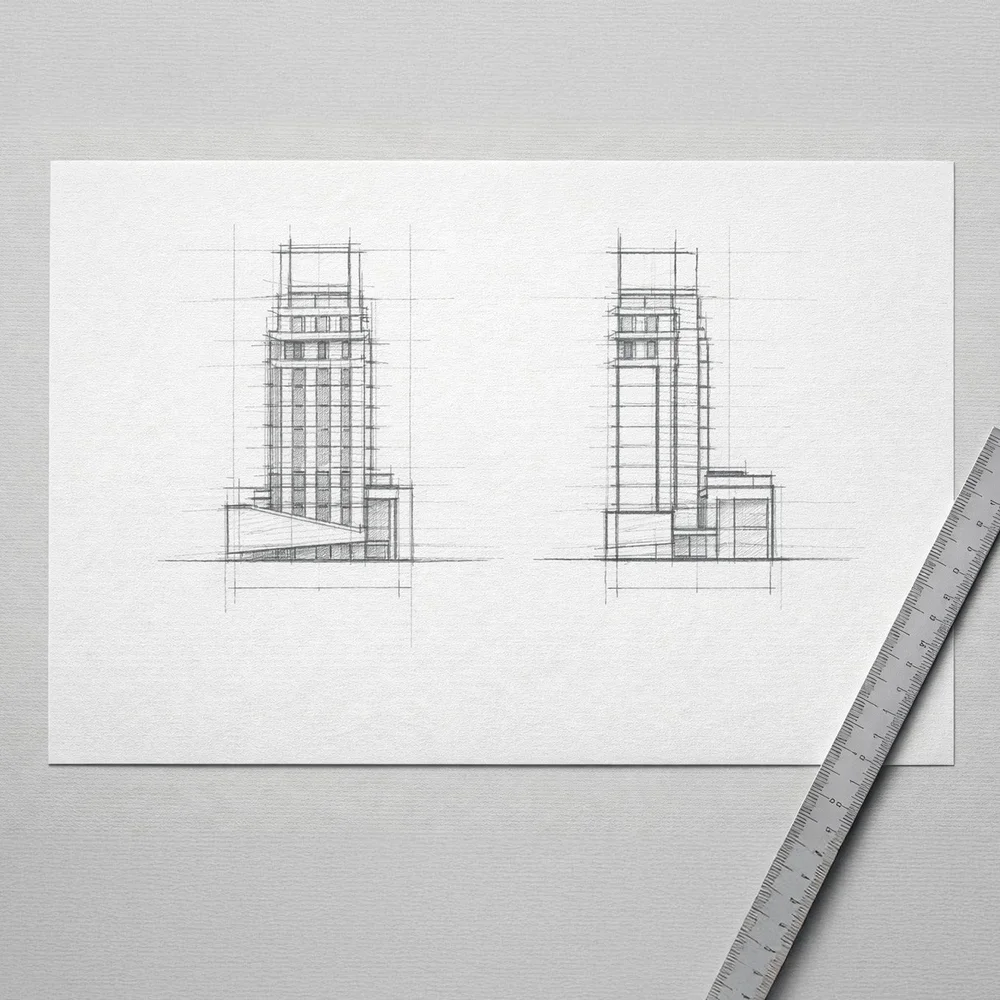
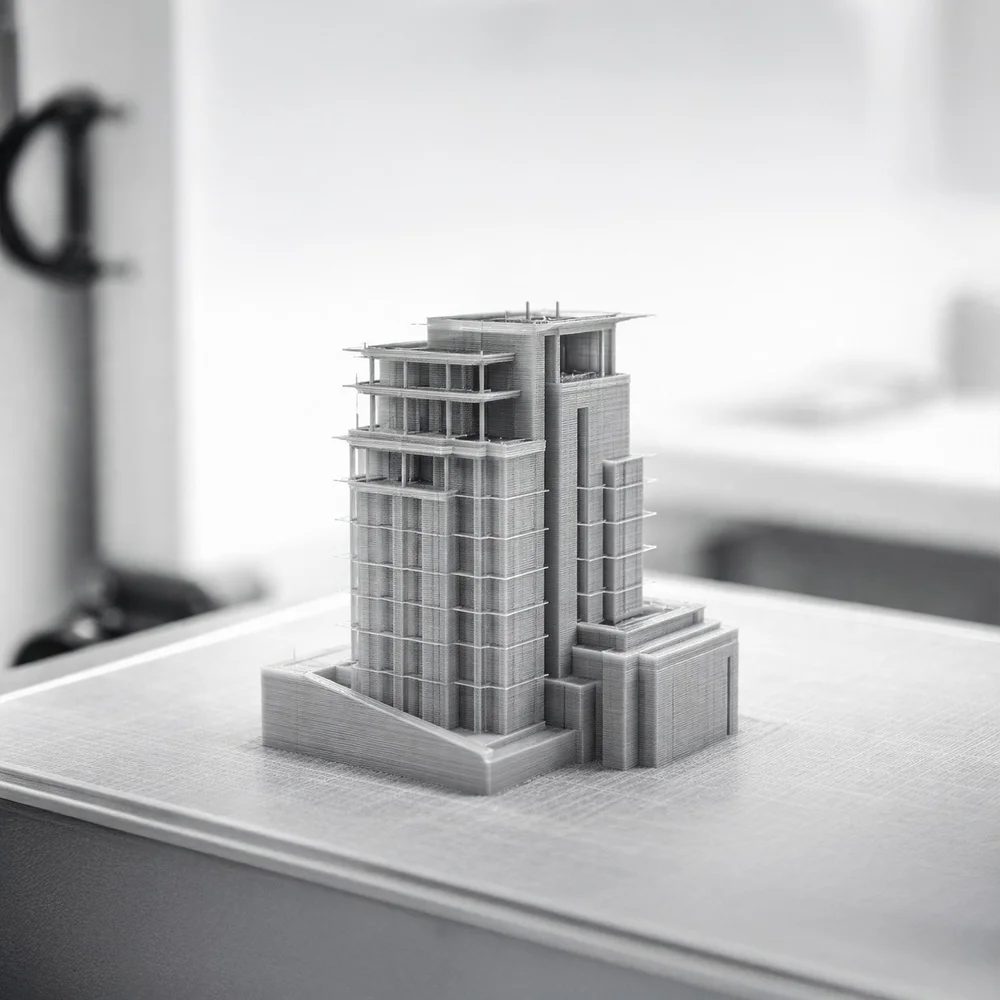
Drawings or digital models resolve size, thickness, component placement and the area for transaction text. The designer and production team consider which features can be made at the chosen scale.
Fine rails and projecting details may need to be simplified or strengthened. An open composition may work better than a solid miniature. The base has to support the object and leave the information readable.
Verify the physical prototype.
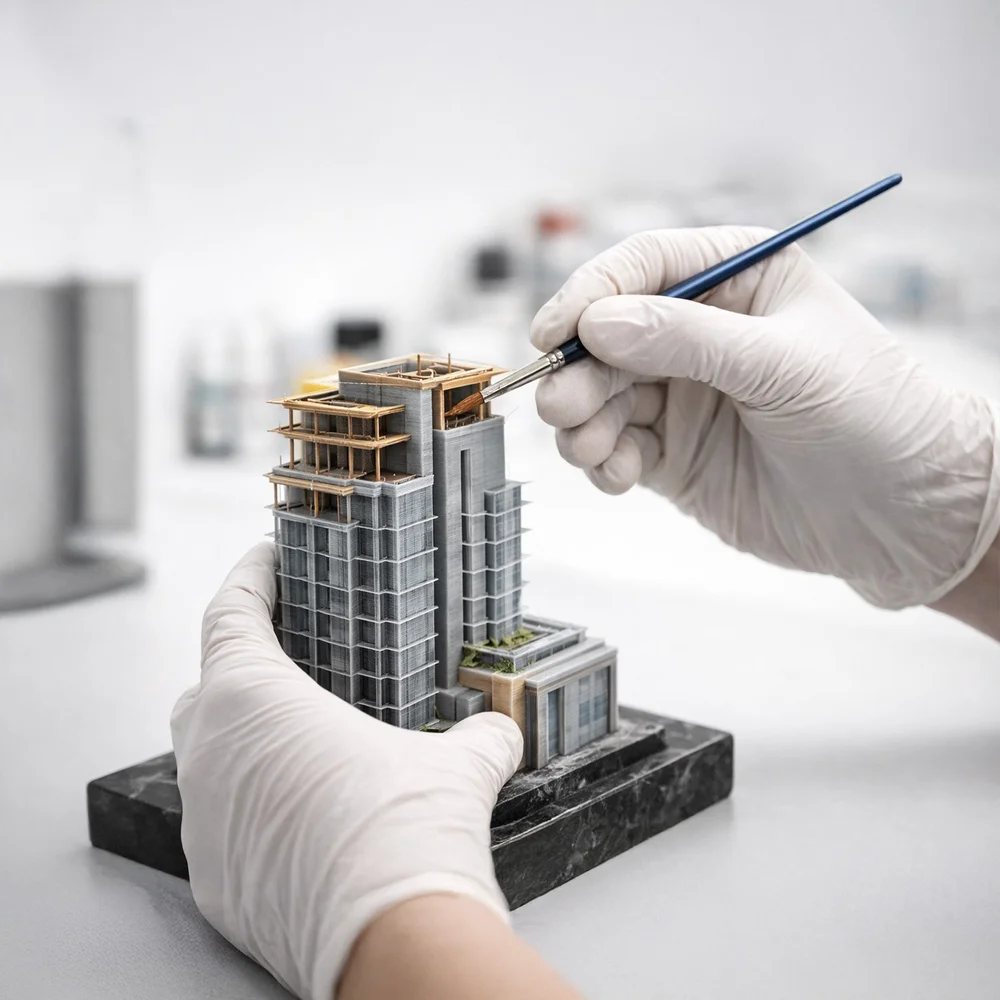
A rendering is useful for reviewing a concept, but it cannot establish the finished weight, stability, clarity or surface quality. The prototype tests those qualities in the actual construction.
At Polaris, every project is prototyped and reviewed internally before the full run. Client review is arranged when appropriate, using photographs, video or an in-hand prototype. Necessary corrections should be addressed before they are repeated across the order.
Inspect the run and plan delivery.
The completed pieces should be checked for consistency with the approved design: alignment, printing, finish, assembly and obvious defects. Packaging must protect both the overall object and its more vulnerable details.
The process is connected from beginning to end. A feature that looks excellent but cannot be packed safely needs attention while there is still time to change it.
Questions, answered.
Must an architectural deal toy be an exact replica?
No. A photograph, silhouette, facade or selective model can represent the property effectively. Scale, method and budget determine achievable detail.
Does every deal toy require a mold?
No. The construction may use casting, machining, cutting, printing or assembled components. Mold making belongs only where the chosen process requires it.
Can design begin before closing?
Yes. A project can begin with a code name, placeholders or limited information, subject to the client’s confidentiality requirements.
Keep exploring.
Put the ideas to work
Have a deal worth remembering?
Share the achievement, audience, quantity, timing and budget. You do not need a finished concept.
Ask John a question →For commissioned projects, I work with the creative team at Polaris Custom Awards.