
Design / The defining idea
Design gives the material a reason.
What makes a deal toy meaningful starts with the achievement, the people and the idea that connects them.
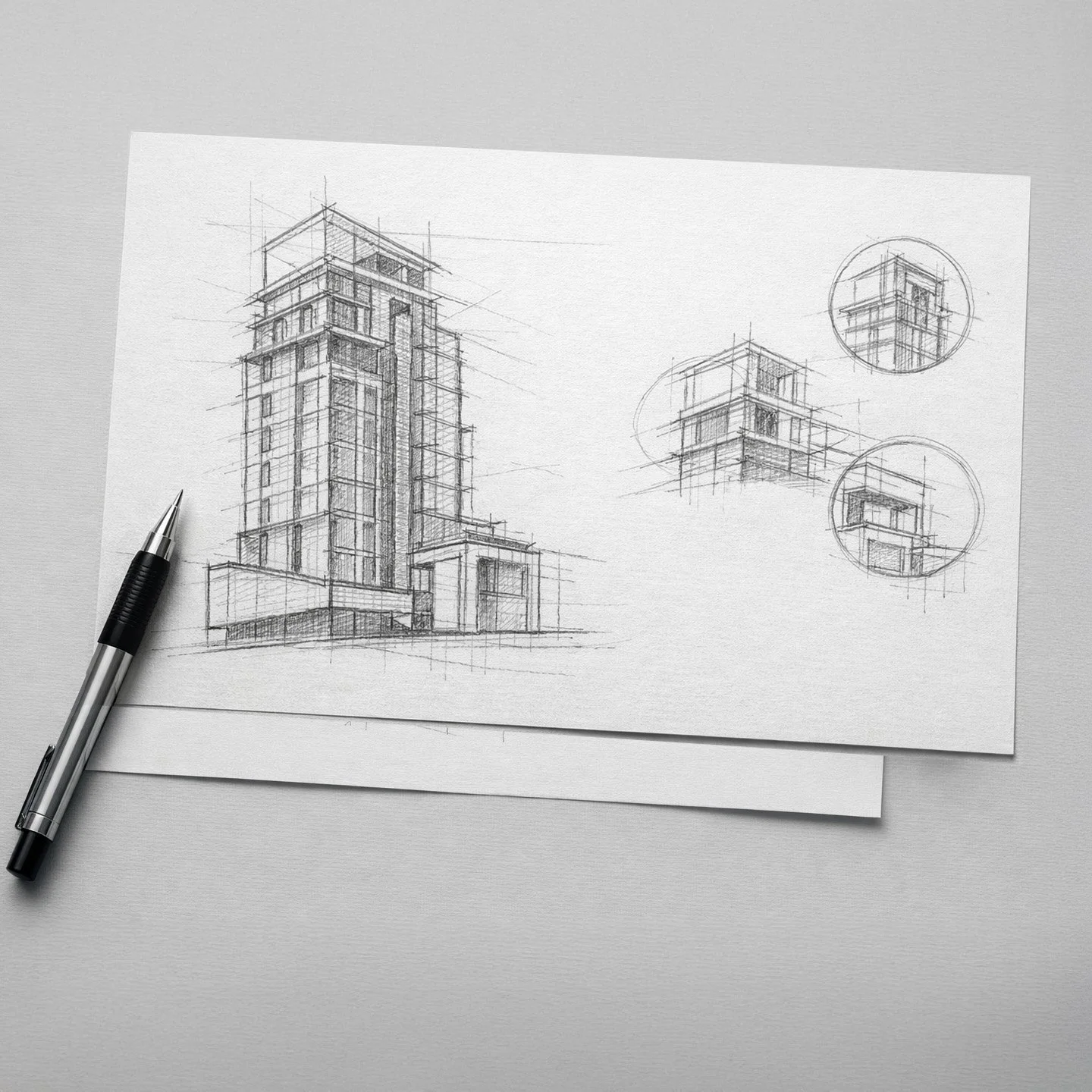
The short answer
Start with what the piece should represent. Then choose materials and construction that make the idea work within the budget and schedule. A client’s material preference is useful direction, but it should be considered alongside the whole brief.
Find the detail that belongs to this deal.
A building, product, location or project name can give a commemorative its identity. Sometimes a photograph carries that connection more clearly than a complicated model. Sometimes the shape of the object does the work.
I begin by asking what matters about the achievement and who will receive the piece. The goal is to find a direction that feels specific without asking the client to become a designer.

Choose what to emphasize.
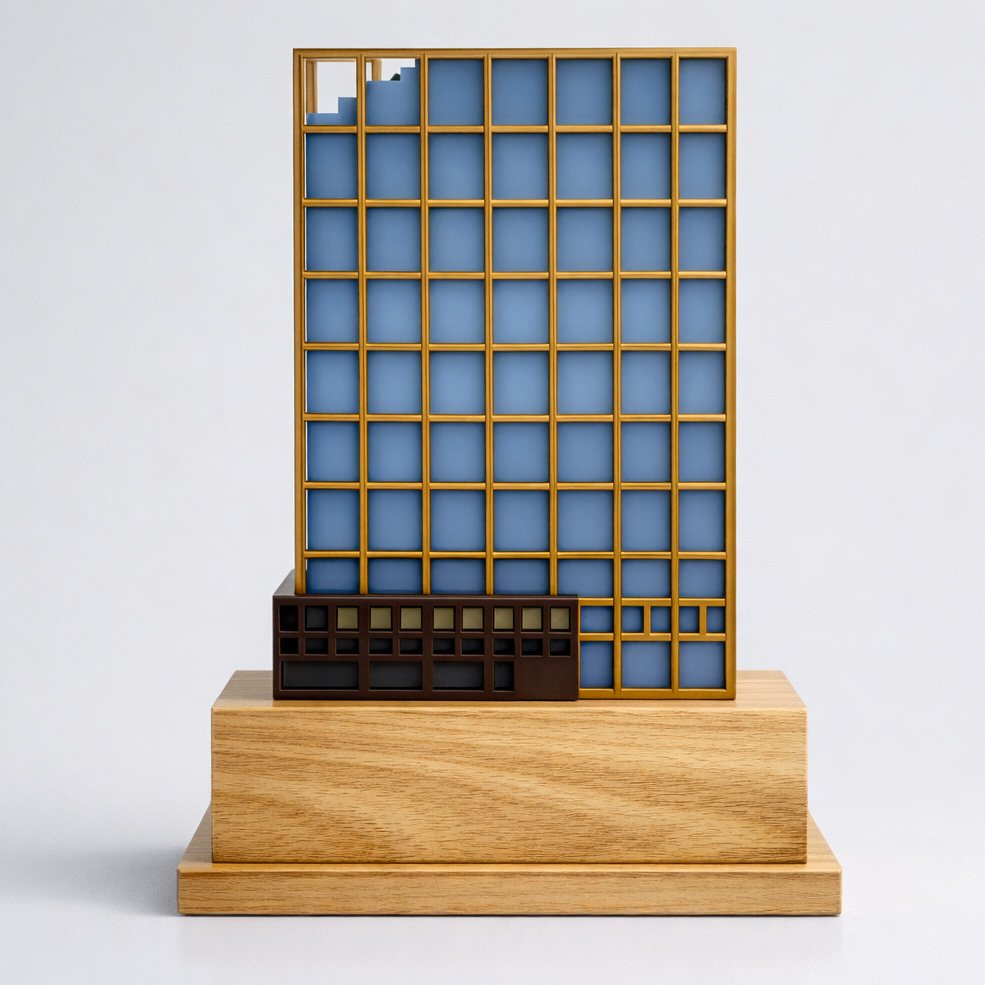
A replica, a logo-based composition and an abstract form are all valid approaches. None is automatically more creative. The important judgment is which details deserve attention at the scale of the finished piece.
A window grid might identify a building better than an exact inventory of every architectural feature. A product silhouette may be enough to make the connection. Additional elements should earn their place.
How do you decide which details deserve attention?
Give the design one clear priority. What should the recipient recognize first: the asset, the company, a place or the achievement itself?
Then separate the contents of the brief into three groups:
- Defining features: the details that make the piece specific to this transaction
- Required information: approved wording, logos, names and dates that must remain legible
- Optional elements: decoration or additional references that may help, but should earn their space
This is a way to set visual priorities. It does not give the designer permission to remove required content. If wording or logos make the layout difficult, the client and designer should agree on another arrangement or approve any shortening.
Look at the proposal at the intended size. An enlarged rendering can make small features seem more important and easier to read than they will be on a desk.
Two concepts for the same brief
Consider an illustrative brief for a transaction involving an industrial building. Its distinctive sawtooth roof and repeated facade bays are the main recognition cues. The piece also needs approved transaction wording and two company logos.
The following concepts are teaching examples, not completed client projects.
Concept A: several features compete for attention
The proposal combines a full miniature building, small exterior equipment, a location map, two prominent logos and a large text panel. Each element relates to the brief, but several ask to be noticed first.
This direction could be useful if the site's operation or layout is central to the achievement. It needs careful scale and composition decisions so that the identifying features remain visible.
Concept B: one recognizable feature leads
The revised proposal emphasizes the roofline and facade rhythm. A separate, clearly arranged area holds the same required wording and logos. The map and small equipment are omitted because this hypothetical brief does not depend on them.
The change makes the visual priority easier to understand. It still needs to be checked for legibility, construction and the client's intended meaning.
The comparison highlights three decisions: the roofline receives more emphasis, the inscription gets a clear reading area, and secondary details are removed. The point is to show the effect of these choices, rather than suggest that the more selective concept is always the right answer.
One brief, two visual priorities
Before: several features compete
After: the roofline leads
- Emphasize the recognizable roofline
- Give required text a clear reading area
- Remove secondary details that do not serve this brief
How should you compare those concepts?
Use the same questions for both:
Meaning: Can the intended recipients recognize why this design belongs to their transaction? Ask someone familiar with the achievement to explain the connection without first reading a designer's description.
Readability: What catches the eye first? Can the wording and logos be read at the finished size? Check both the first impression and the closer view.
Construction: Which features are printed, cut, modeled, cast or assembled? Ask how projecting details are supported and how the text remains visible from normal viewing angles.
Deadline: What development, prototype and approval stages does each direction require? Compare a project-specific schedule through delivery. A simpler drawing does not establish that the object can be made faster.
Cost: Compare complete quotes for the same quantity, finish expectations, packaging and delivery. Fewer components may reduce work, but demanding edgework, finishing or tooling can offset that difference.
If Concept A tells an essential part of the story that Concept B loses, that is a reason to refine A. If the additional detail carries little meaning, B may give the important elements more room. Explain the tradeoff when recommending a direction.
Develop design and construction together.
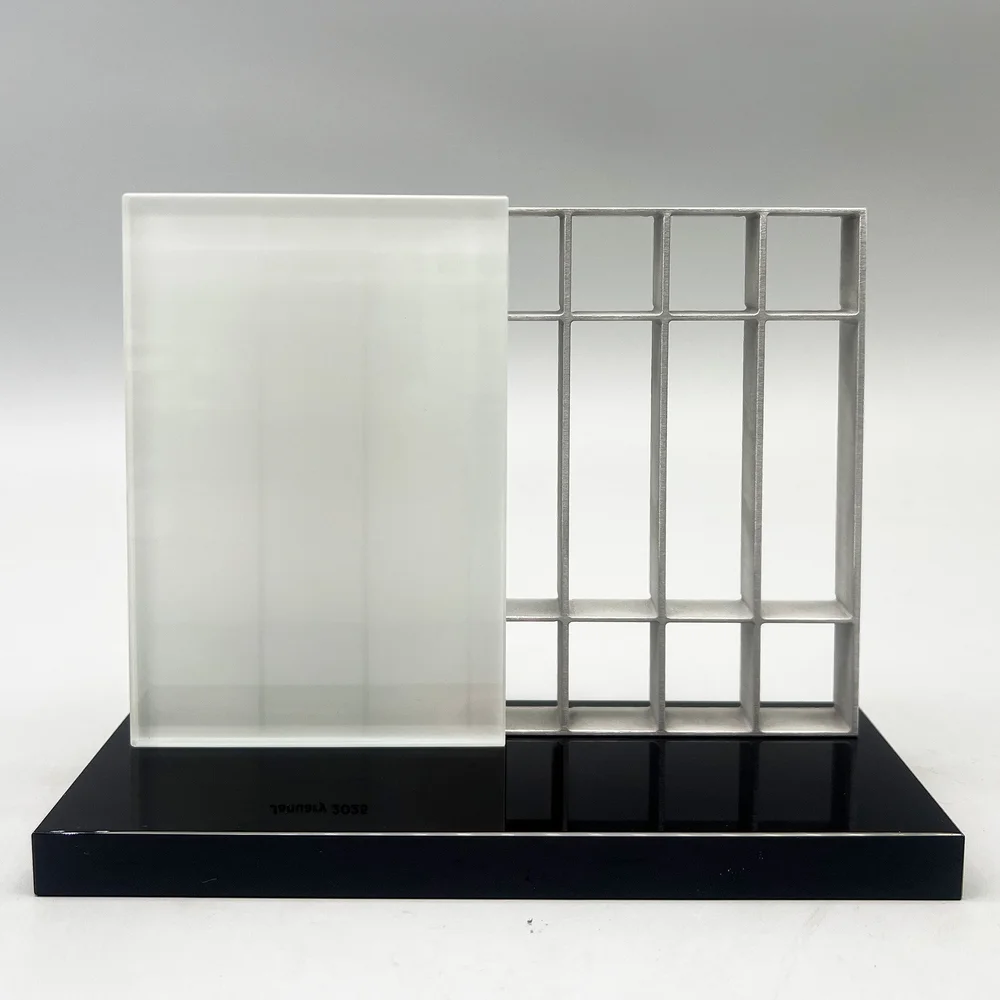
Material choices affect thickness, weight, finish, color, cost and timing. They belong in the design conversation early. A delicate detail that looks convincing in a rendering may need to change before it can survive production and shipping.
The useful question is: what construction will express this idea well? Clear panels can frame a subject. Resin can introduce a sculptural element. Metal can provide a particular finish or structural detail. Wood can change the tone and contrast of the composition.
Make the ordering process easier.
Some clients arrive with a precise concept. Others have a deadline and a transaction description. Both are good starting points. I want to understand the direction when it exists and offer useful options when it does not.
Clear recommendations should explain the tradeoffs: what the recipient will notice, what the manufacturing method can achieve, and where budget or timing changes the available choices.
When reviewing concepts internally, give colleagues the same short brief and the same criteria. Ask which direction best represents the achievement and what specific change would improve it. Consolidate the response before requesting another version.
Useful feedback identifies an effect: “The roofline is the feature our team recognizes, but the logo obscures it.” That gives the designer something concrete to resolve while leaving room to choose an appropriate solution.
Questions, answered.
Do I need to choose a material first?
No. Start with the occasion, recipients, approximate quantity, delivery date and budget. If you have a material preference, include it.
Is a more elaborate deal toy always better?
No. A clear idea, good proportions and appropriate execution can be more effective than extra components or detail.
How can I tell whether a design has too much detail?
View it at the intended size and identify the first thing you notice. If the defining feature is hard to find, the inscription is difficult to read, or several elements compete equally, ask the designer to test a clearer arrangement.
Does simplifying the design always reduce the price?
No. Cost depends on how the object is made. Removing a component may reduce assembly, while the remaining form may still require precise machining, tooling or finishing. Ask for the actual difference between the proposed versions.
Keep exploring.
Put the ideas to work
Have a deal worth remembering?
Share the achievement, audience, quantity, timing and budget. You do not need a finished concept.
Ask John a question →For commissioned projects, I work with the creative team at Polaris Custom Awards.