
History / Terminology
From transaction announcement to physical reminder.
Why “financial tombstone” became the name for an object people keep.
Relationships / Records / Symbols
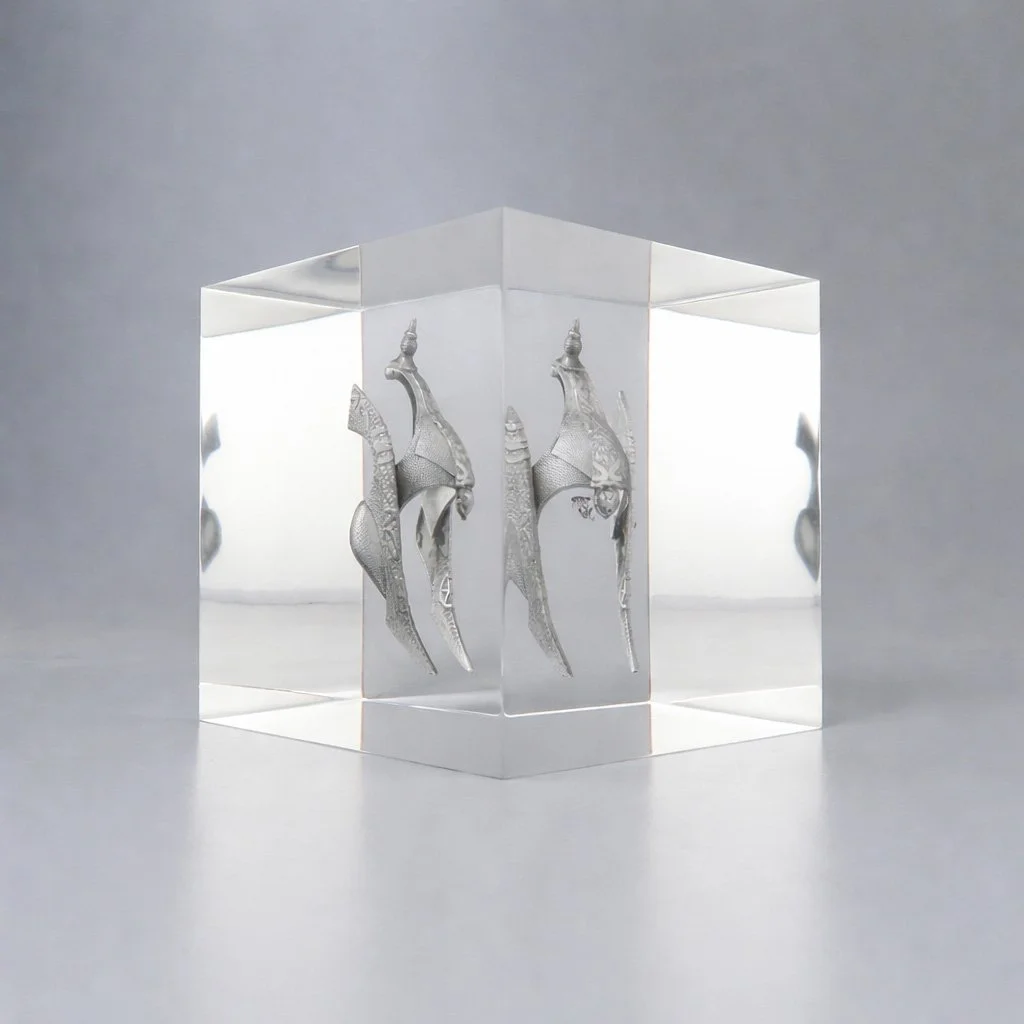
Deal toys tell a history of relationships, records and symbols: from objects that gave a bond a physical form, through framed financial announcements, to designs that express the character of a transaction.
Objects that represented relationships
The instinct behind a deal toy reaches much further back than Wall Street. People have long used physical objects to acknowledge relationships, record exchanges and celebrate shared achievements.
Ancient bronze hospitality tokens represented bonds among individuals, families and communities. Clay tablets preserved records of merchant trade. Those objects had different purposes, but they show how people gave physical form to otherwise intangible relationships and transactions.
These are cultural antecedents, rather than evidence of an uninterrupted line leading to the modern deal toy.
Making an achievement tangible
The nineteenth century offers more direct examples of commemorating an achievement through an object. The Golden Spike made for the completion of the transcontinental railroad in 1869 carried inscriptions and the names of railroad officers and directors. A railway spike became a symbol of a railway’s completion.
Transatlantic cable souvenirs took a different approach: preserve a piece of the achievement itself. The Smithsonian holds cable material packaged by Tiffany & Co., including an 1866 souvenir.
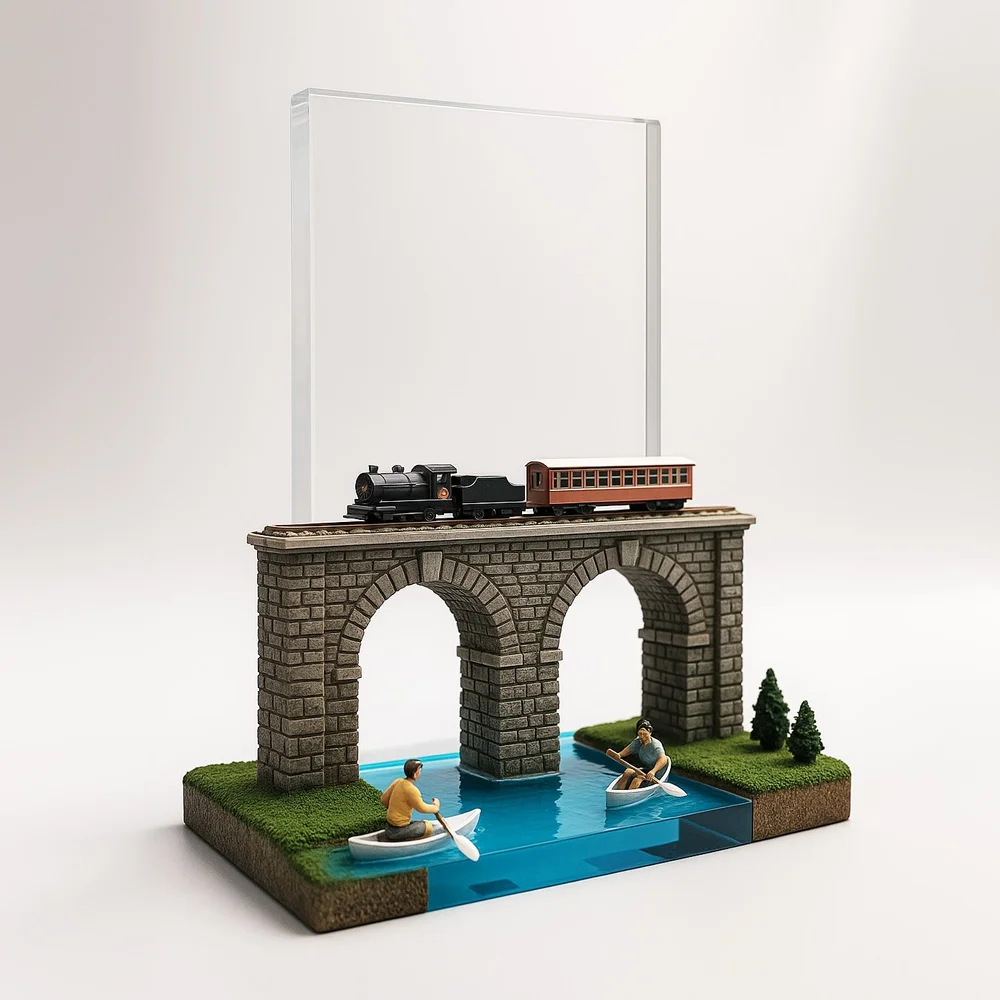
Both ideas remain familiar in deal-toy design: create a symbolic representation, or incorporate something physically connected to the project.
From announcement to desk object
The financial tombstone’s immediate ancestor was the printed transaction announcement. Bankers saved and framed these announcements before embedding them in Lucite. The names and financial details recorded an achievement and the firms associated with it.
Lucite was developed in the 1930s. Its clarity allowed printed information and suitable objects to appear suspended within a three-dimensional form. By the late 1960s, Lucite-embedded partnership announcements existed; specialist closing-gift businesses developed during the following decade.
1973: the announcement becomes a symbol
Burnham & Co. and Drexel Firestone combined on March 16, 1973, forming Drexel Burnham & Co. The names matter: this was not a merger between Drexel and Firestone.
The commemorative associated with the transaction was a clear cube containing two brass balls, with no printed transaction text. Historian D. Graham Burnett describes the piece in his essay on deal toys.
John Hathaway’s design interpretation
I regard it as the first real deal toy in the creative sense. The object communicated the confidence and audacity associated with the deal. Its participants could recognize the meaning without reading an announcement.
That is the leap that matters to me: the commemorative became a symbol of the transaction. I’m making a distinction about design, rather than claiming that no earlier commemorative existed.
A tradition that continues
The vocabulary of deal toys has continued to expand. Ginkgo Bioworks’ own studio documents amber-colored Lucite pieces containing glass ampoules, created for its 2021 public listing. The materials and imagery connect the object to the business itself.
A meaningful deal toy can draw on a product, a place, a building, a shared experience or an inside reference. The transaction details establish what happened. A well-chosen idea helps people remember why it mattered.
The broader toolkit does not make complexity an obligation. A strong photograph or a well-proportioned clear shape may still be the most appropriate solution.

Further reading
The fuller history, in my own words.
For the fuller history and my perspective on its design lessons, read “The History of Deal Toys: Why Wall Street Marks Its Closing Moments in Lucite, Crystal and Resin,” originally published on LinkedIn in November 2025.
Questions, answered.
Are deal toys and financial tombstones the same thing?
In current industry usage, both terms commonly refer to physical transaction commemoratives. “Tombstone” also has a separate meaning as a financial announcement.
Are deal toys always clear acrylic blocks?
No. The category includes acrylic, crystal, resin, metal, wood and mixed-material constructions.
Who invented the first deal toy?
There are several milestones behind that question: framed financial announcements, early Lucite embedments, specialist closing-gift suppliers, and designs that use symbolism to express the character of a deal.
For John Hathaway, the 1973 Burnham–Drexel Firestone brass-balls piece marks the decisive creative leap. Its object carried the message. Calling it the first real deal toy in that sense is a design interpretation, rather than a claim that one person invented every form of transaction commemoration. Read John’s longer history article.
Keep exploring.
Put the ideas to work
Have a deal worth remembering?
Share the achievement, audience, quantity, timing and budget. You do not need a finished concept.
Ask John a question →For commissioned projects, I work with the creative team at Polaris Custom Awards.