How Deal Toys are Actually Made

Resin Edition

What You’ll Learn

  • Why casting resin is often chosen for sculptural forms and complex geometry

  • The two main production workflows, sculpt-first vs CAD and 3D print-first

  • How molds are made and why shrinkage, draft and parting lines matter

  • How resin is mixed, degassed and poured, plus what causes bubbles and voids

  • Why clear resin is risky for premium work, and when it still has a role

  • How painting, coatings and hybrid bases change how resin pieces feel and age

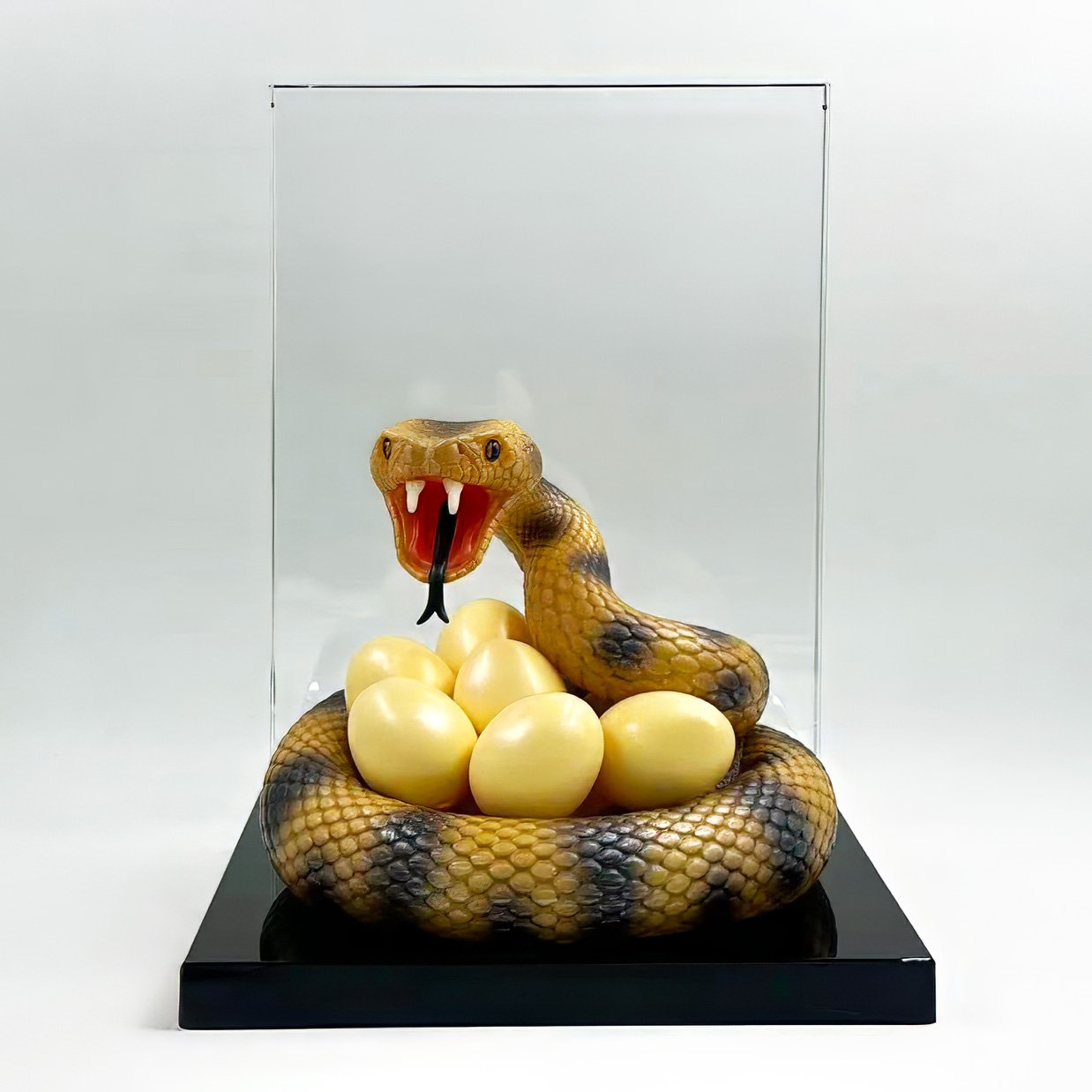
Resin is one of the most versatile materials used in deal toys. It can capture organic shapes, fine textures and sculptural forms that would be difficult or cost-prohibitive in metal or crystal. It also supports small-batch production in a way that is flexible, repeatable and highly craft-driven.

Resin is chemically related to other plastics, but it behaves very differently from cell-cast Lucite. Most casting resins cure at room temperature under ambient pressure. They do not require autoclave pressure or controlled heat schedules to set. That difference changes everything about how they are molded, finished and scaled into a limited run.

Why Resin Exists in the Deal Toy Toolkit

Resin is typically chosen when the design requires one or more of the following:

  • Figurative or sculptural elements, including people, animals or objects

  • High detail in small features, textures or relief

  • Complex undercuts or geometry that would be difficult to machine

  • A specific opaque color palette, especially brand or thematic colors

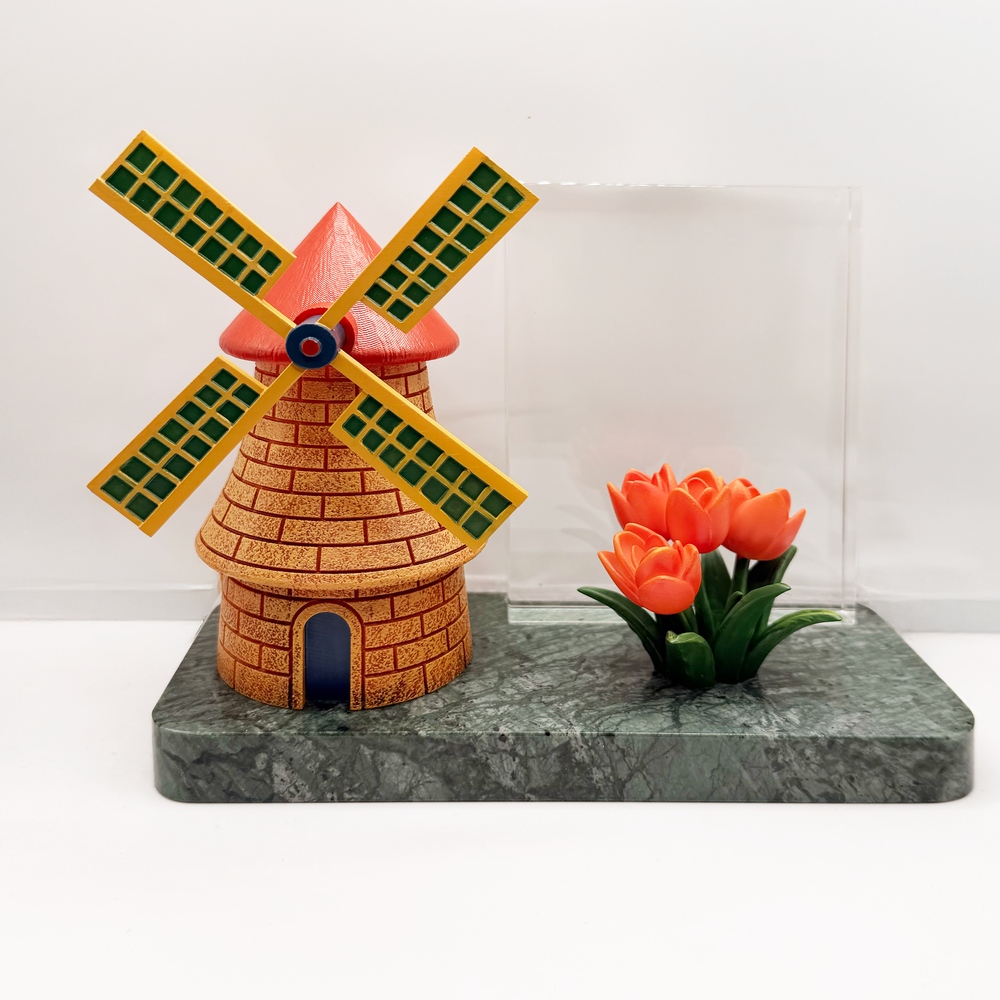
  • A multi-material composition, for example a resin figure paired with a crystal base

Resin can be lightweight compared to metal and crystal, which is sometimes desirable. In premium work, that lighter weight is often balanced by pairing resin with a denser base to restore physical presence.

The Two Main Resin Production Workflows

Most resin deal toys follow one of two paths.

Workflow A: Sculpt-first, then mold

This is the traditional craft route.

  1. An artisan sculpts a master model, often in clay or wax

  2. The master is refined for symmetry, proportion and surface detail

  3. A production mold is made from the master

  4. Resin casts are produced from that mold

  5. Each piece is hand finished and painted

This approach is ideal when the “feel” of the form matters as much as dimensional accuracy. It often produces the most lifelike surfaces because sculptors understand where to exaggerate or soften detail so it reads correctly after casting and paint.

Workflow B: CAD and 3D print-first, then mold

This is the modern production route.

  1. A 3D model is built in CAD or digital sculpting software

  2. You review screenshots or a neutral render for form approval

  3. A physical prototype is 3D printed

  4. The print becomes the master pattern for mold making

  5. Resin casts are produced, then finished and painted

This approach is faster for revisions and works well when geometry must match reference material closely. It also introduces a key reality: the digital model is only the beginning. Print artifacts, seam planning and surface refinement still require experienced hands.

Mold Making, Parting Lines and Shrinkage

Resin casting lives and dies on mold design.

Most small-batch resin deal toys use flexible molds made from silicone or similar elastomers. These molds are built around a master pattern and engineered for repeatable casting.

A few key constraints shape the final design:

  • Shrinkage: Many casting resins shrink slightly as they cure. Masters and molds are planned with this in mind so the finished part lands at the intended size.

  • Draft and release: Even flexible molds need smart release planning. Undercuts may require multi-part molds or design edits.

  • Parting lines: Where the mold splits creates seams. Those seams must be placed where they can be cleaned without ruining detail.

  • Venting and gating: Resin needs a path to flow in, and air needs a path to escape. Poor venting creates voids, bubbles and incomplete fills.

This is why resin casting is not just “pour and go.” Mold engineering is a design discipline in itself.

Mixing, Degassing and Pouring

Once a mold is ready, production involves controlled repetition.

  1. Resin components are measured accurately and mixed thoroughly

  2. Pigments and fillers are added, if the piece is opaque or metallic

  3. Air introduced during mixing is managed through process choices

  4. Resin is poured into the mold in a controlled way that avoids trapping air

  5. The mold is left to cure at room temperature until the piece can be demolded

Even though resin cures at ambient conditions, bubble control remains a major quality factor. Many workflows use vacuum degassing, pressure, or careful pour techniques to reduce visible bubbles, especially when fine surface detail is involved.

Clear Resin and Why It Is Avoided in Premium Deal Toys

Clear resin is sometimes offered by low-end manufacturers because it appears to promise transparency and embedment without the cost or complexity of Lucite or crystal. At first glance, it can resemble glass-like clarity.

In practice, clear resin is poorly suited to premium deal toys and is rarely used by experienced producers.

Clear resin lacks the optical precision required for commemorative objects intended to endure. Even when freshly cast, it does not achieve the crisp light behavior of cell-cast Lucite or optical crystal. Under natural light, it often reads as slightly hazy or film-like, an effect that becomes more noticeable over time.

Long-term stability is an even greater concern. Many clear resins are prone to yellowing when exposed to UV light. This shift is gradual but irreversible, and it undermines the integrity of a piece meant to represent a lasting achievement.

Surface performance also differs. Clear resin tends to show scratches, scuffs and coating inconsistencies more readily than Lucite, and protective clear coats can alter gloss or tone as they age.

For these reasons, reputable deal toy producers avoid clear resin altogether. Resin is best used where it excels: creating sculptural, opaque forms with character and detail. When transparency, clarity or optical precision are required, other materials are chosen instead.

________________________________________________________________

Expert Insight: Resin Is Easier to Cure, Harder to Perfect

Resin can cure at room temperature and ambient pressure, but premium results depend on what happens before and after curing. Mold design, venting, mix control, bubble management and seam cleanup are the difference between a piece that feels like a prototype and a piece that feels finished.

________________________________________________________________

Finishing, Painting and Surface Protection

Resin castings always require hand finishing. No resin part comes out of a mold ready for use. Seams, vents and minor surface imperfections are an inherent part of the casting process and must be addressed by hand.

Typical finishing steps include:

  • Seam removal and surface cleanup

  • Controlled sanding to refine surfaces without softening detail

  • Priming to create a stable, uniform base for paint

  • Hand painting, often in multiple passes

  • Clear coating to protect the surface and unify sheen

Paint does more than add color. It determines how the object reads as a material. A matte finish can feel modern and technical. Satin finishes tend to feel more refined. High-gloss finishes are unforgiving and require careful control to avoid looking plastic or uneven.

Assembly and Hybrid Builds

Resin is frequently used as the “story element” in a hybrid deal toy, paired with a denser, optically cleaner material for structure and weight.

Common pairings include:

  • Resin figure or object mounted to a crystal base

  • Resin relief element integrated into a Lucite structure

  • Resin component paired with machined metal accents

This approach preserves what resin does best while compensating for its lighter weight and brittleness.

Resin excels when design intent calls for sculptural form rather than transparency, a distinction explored in Design vs Material: What Makes It Meaningful.

How recipients perceive realism, weight and finish ties closely to recognition psychology, discussed in The Psychology of Recognition.

________________________________________________________________

Resin deal toys are less about the chemistry of curing and more about craft across stages: modeling, mold engineering, casting discipline and finishing judgment.

When those stages align, resin becomes a powerful medium for turning an abstract deal story into a sculptural object that feels intentional, durable and complete.

The strongest, moste effective resin deal toys use the material for what it does uniquely well, then pair it with other media to create a finished object with presence.

Recommended Next
The Psychology of Recognition
Design vs Material: What Makes It Meaningful